about the film
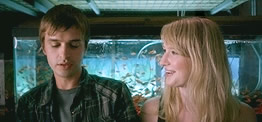
"Annette Apitz has made a strong film with some tough subject matter ... a character study of flawed individuals that is memorable in its execution."
--Film Threat
"A tremendous achievement in storytelling, and it has left an indelible mark on me. Characters come first, allowing for a very human story to unfold almost effortlessly. The film reminds me of "You Can Count On Me," another excellent film dealing with siblings at opposite ends of the personality spectrum."
--Josh Mandel, head programmer of Slamdance
WATCH FIGHTING FISH on > AMAZON > HULU and > VIMEO ON DEMAND
SYNOPSIS
"Fighting Fish" is a drama about a brother and sister in their early twenties who have to overcome their tempestuous past in order to have a chance at real happiness.
Putting his dreams of traveling on hold, 21-year-old David still lives at home, taking care of his little brother and sister. When his wild and beautiful sister Alice returns after a long absence, their complicated past comes back to haunt them. As David falls in love with the new girl in town, Alice is driven to desperate measures to keep her brother close, and her world intact.
PRODUCTION
"Fighting Fish" is the first feature coming from producer Bertha Pan's recently launched Slew Pictures. It is Annette Apitz's feature-film directorial debut. The film was shot with a Red camera in upstate New York.
The talented cast includes Val Emmich ("Ugly Betty"), Anna Moore ("The Life Before her Eyes"), Halley Feiffer ("The Messenger," "Gentlemen Broncos") and Haviland Morris ("Adam"). Three of Val Emmich's songs are on the film's soundtrack. Other soundtrack artists who supported this project include Elf Power, Imperial Teen, Chris Trapper, This Car Up, and Mark McAdam.
DIRECTOR'S STATEMENT
The script for Fighting Fish grew out of a script I was writing about an unhappy love affair between a man and a woman who shouldn’t be together. At the same time I was exploring stories about families, and was becoming more and more aware of how deeply our upbringing influences us throughout our lives. These two interests became the script for Fighting Fish.
Fighting Fish explores some troubling behavior. But to me, more than anything, the film is a story about family—in this case a broken one. The hurt that occurs is just one symptom of a fractured family. Above all, the film shows what happens when your only chance of emotional survival is to create a substitute family, of any kind.
One of my main challenges when making a film which touches upon a complicated subject matter was to nevertheless have people walk out of the theater with a bittersweet smile on their face. So we made a film that does not just deal with a dark subject. More than anything, Fighting Fish is about love-it's a romance, a coming of age tale, and a story about forgiveness. As a viewer you are torn—can you root for the characters caught in this complicated relationship? You know you shouldn’t—but you almost want to.